
Smartwatcher Guide: How to Choose a Smartwatch That Fits Daily Life
· Editorial Team

Last Updated: October 26, 2026
Quick Summary
A smartwatcher should be chosen by matching the watch to your primary need first, then setting a budget, then comparing specifications. Check phone compatibility and sensor quality before buying, because no sensor quality compensates for a watch that fights your phone. Confirm the watch supports your phone model and that call answering works.
- Water resistance rated at 5 ATM covers swimming and heavy rain; lower ratings do not.
- Continuous GPS is the single biggest battery drain during workouts.
- Run a three-day test at the same settings to measure your typical daily battery burn.
- Wrist sensors are wellness tools, not medical devices, so never change treatment based on a reading.
- Search reviews for battery after six months rather than launch-day coverage.
Table of Contents
- What a Smartwatch Actually Does and Why It Belongs in Your Routine
- Smartwatch Features That Matter for Everyday Use
- Smartwatch Health Tracking: Heart Rate, Sleep and Blood Pressure
- Smartwatch Compatibility: Android, iOS and the Mobile App
- Smartwatch Battery Life: What to Expect and How to Test It
- How to Choose a Smartwatch by Needs and Budget
- Frequently Asked Questions
What a Smartwatch Actually Does and Why It Belongs in Your Routine
A smartwatch is a wearable computer that pairs with your phone to deliver notifications, calls, fitness tracking and health monitoring from your wrist. At HONORABLE VETERANS SOLUTIONS, we see the smartwatcher category as one of the clearest examples of wearable technology earning its place in daily life. The smartwatcher decision matters because the wrong pick becomes a charging chore within weeks.
Beyond Telling Time: The Wearable Computer on Your Wrist
The touchscreen is the interface, but the real work happens in the background: step count, calorie tracking, workout tracking and sleep monitoring run continuously. What separates a good smartwatch from a frustrating one is how quietly that tracking happens.
How a Smartwatch Works With Your Phone
Pairing happens over Bluetooth, and smartphone compatibility decides most of your experience. Android and iOS compatibility are not equal: some features work fully on one platform and partially on the other. The mobile app is where you review data, adjust settings and manage notifications. Before buying, confirm the watch supports your phone model and that call answering works.
Smartwatch Features That Matter for Everyday Use
Most spec sheets list dozens of smartwatch features, but only a handful change daily use. Focus on display, notification handling, GPS accuracy and sensor quality.
Calls, Notifications and the Touchscreen Interface
Call making and call answering from the wrist are genuinely useful for busy professionals and for seniors who want quick access without hunting for a phone. Notifications should be glanceable, and a good interface lets you filter which apps reach your wrist, a watch that pushes every alert gets muted within a week.
GPS, Sensors and the Specs Worth Checking
Built-in GPS matters if you walk, run or cycle outdoors without carrying a phone. A barometer helps with altitude tracking, and a compass is useful on trails. Water resistance rated at 5 ATM covers swimming and heavy rain; lower ratings do not. Check the sensor list before you buy.
Smartwatch Health Tracking: Heart Rate, Sleep and Blood Pressure
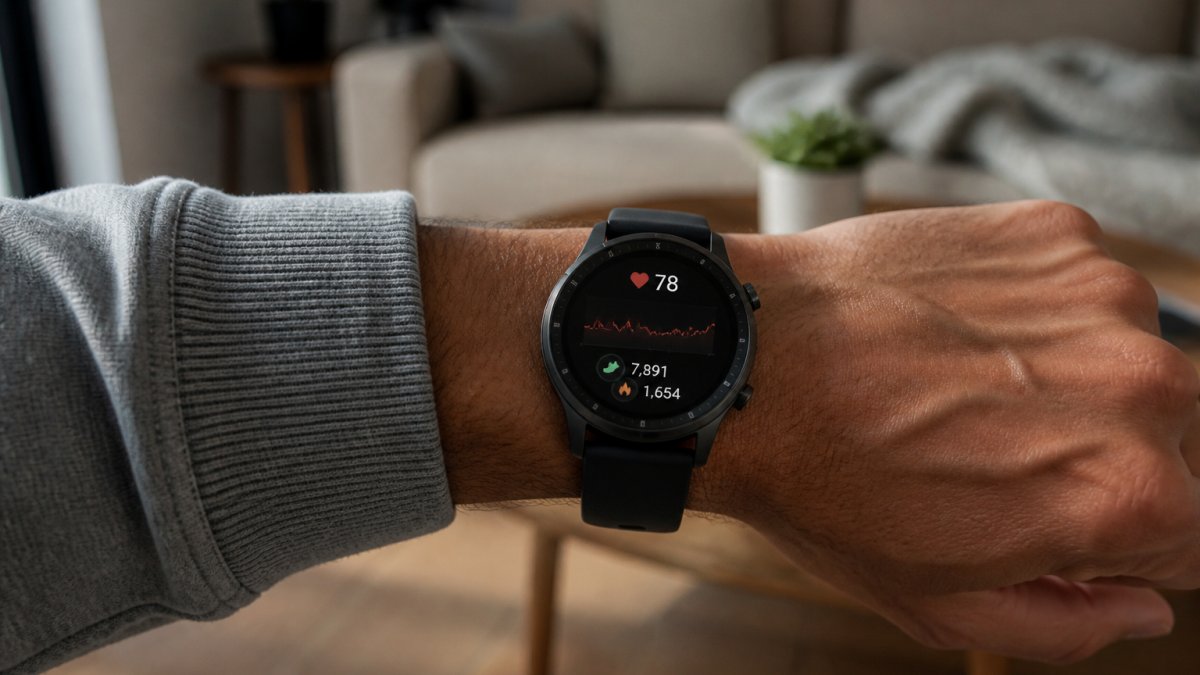
Smartwatch health tracking covers heart-rate monitoring, sleep monitoring and, on some models, blood pressure estimation. These are useful trend tools, not medical devices. They show patterns over time; they do not diagnose anything. If a reading concerns you, treat it as a prompt to talk to a clinician, not as an answer.
How the Sensors Actually Work
Most wrist wearables use optical photoplethysmography (PPG): green or infrared LEDs shine into the skin and a photodiode measures how much light is absorbed by pulsing blood.
Sleep tracking uses the same PPG signal plus accelerometer data to infer sleep stages.
Blood-pressure features vary widely. Some watches use a cuffless optical estimate that must be calibrated against a validated upper-arm cuff; others add a micro-pump cuff in the strap.
What the Numbers Mean in Practice
- Resting heart rate: A stable baseline is more informative than any single reading. A sustained rise over several days can reflect illness, poor sleep, or overtraining, a prompt to rest, not a diagnosis.
- Heart-rate variability (HRV): Reflecting beat-to-beat variation, HRV trends are used by many athletes to gauge recovery. Absolute values vary enormously between people, so compare only against your own baseline.
- SpO2 (blood oxygen): Useful for spotting trends at altitude or during sleep, but wrist readings are sensitive to motion and fit; they are not a substitute for a pulse oximeter in a clinical setting.
Fitness Tracking, Sports Modes and Daily Activity
A fitness tracker inside a smartwatch counts steps, estimates calories and logs workouts through sports modes. For most people, daily activity tracking beats a long list of niche sports profiles, so pick a watch whose step count and workout tracking match how you actually move. Two practical checks: does it auto-detect walks and runs, and can its app correct a mislabeled activity after the fact?
What Health Sensors Can and Cannot Tell You
Heart-rate monitoring is mature and reliable for trends. Sleep monitoring is useful for spotting patterns but less precise than clinical sleep studies.
Smartwatch Compatibility: Android, iOS and the Mobile App
Compatibility is the most overlooked smartwatch feature. A watch that pairs beautifully with one phone platform may lose call answering, messaging replies or app support on the other. Check compatibility first: no sensor quality compensates for a watch that fights your phone.
Bluetooth Pairing and Staying Connected
Bluetooth pairing should be a one-time task. If a watch drops its connection repeatedly, the cause is usually an outdated mobile app, aggressive phone battery optimization killing the background service, or a watch paired to two devices at once. Re-pair cleanly, update the app, and exclude it from battery restrictions.
Privacy and Health-Data Handling
Health data is sensitive, and handling varies by brand and region. Before buying, read what the manufacturer stores, whether data leaves the device, and whether you can export or delete it. Free apps that request broad health permissions deserve a second look.
Smartwatch Battery Life: What to Expect and How to Test It
Smartwatch battery life ranges from roughly a day on feature-heavy models to a week or more on simpler ones, and the gap comes down to display type, GPS use and always-on settings. Manufacturer claims assume light use. Real-world results rarely match them. The honest way to compare two watches is to understand what drains the battery and to run the same simple test on each.
What Actually Drains the Battery
- Display: An always-on AMOLED panel can consume a meaningful share of the daily budget; turning it off and using raise-to-wake typically extends runtime noticeably.
- GPS: Continuous GPS is the single biggest drain during workouts. A one-hour outdoor run can cost several times the battery of an hour at rest. Watches with dual-band GPS are more accurate but draw more power.
- Sensors and background monitoring: Continuous heart rate, SpO2 sampling, and sleep tracking all run in the background. Sampling every few minutes costs far less than continuous monitoring.
A Simple, Repeatable Test Protocol
Manufacturer claims are hard to compare because test conditions differ. Run your own controlled test:
- Charge to 100% and note the time.
- Use the watch normally for three full days, same notifications, same workouts, same always-on setting.
- Record the battery percentage each evening at the same time.
- Repeat once with GPS-heavy use (a 45-60 minute outdoor workout each day) to see the workout drain separately.
That gives you two numbers that matter: your typical daily burn and your workout-day burn. Compare those against the watch's rated capacity to estimate useful life, most lithium-based watch batteries lose capacity gradually over a few hundred charge cycles.
Charging Habits and Real-World Trade-Offs
Charging daily is fine if it becomes a ritual: take the watch off, place it on the charger, put it back on with your morning routine.
A few practical patterns help:
- Daily-charge watches suit people who already have a nightly routine and want the richest feature set; forgetting the charger for a night leaves you without a watch the next day.
- Multi-day watches trade some sensors and display quality for runtime. They suit travelers and people who dislike charging rituals.
- Fast charging matters more than total capacity for daily-charge models: a short top-up during a shower can add most of a day.
How to Choose a Smartwatch by Needs and Budget
Match the watch to your primary need first, then set a budget, then compare specifications. Buying by brand first is how people end up with features they never use and a watch they stop charging.
| Primary Need | Features to Prioritize | Trade-Off to Accept |
|---|---|---|
| Health monitoring | Heart-rate and sleep sensors, reliable app | Shorter battery life |
| Fitness and outdoors | GPS, barometer, compass, 5 ATM | Bulkier case, higher cost |
| Calls and notifications | Touchscreen, call answering, filtering | Daily charging habit |
| Seniors and simplicity | Large display, easy interface, safety features | Fewer sports modes |
| Everyday wear | Comfort, watch face options, battery life | Fewer advanced sensors |
Start with the row that describes you, then check compatibility with your phone and read hands-on reviews. Look for free shipping and free returns so you can test comfort on your own wrist.
Frequently Asked Questions
What should you look for when buying a smartwatch?
Start with compatibility: check that the watch pairs with your iPhone or Android phone and that the mobile app is easy to use. Then match features to your routine. If you mainly want notifications and calls, focus on display quality and Bluetooth reliability. If health is the priority, look at heart-rate monitoring, sleep tracking and water resistance ratings like 5 ATM. Battery life and charging style matter too, especially for daily use.
Do smartwatches work with both iPhone and Android?
Many smartwatches work with both iOS and Android, but some features may be limited depending on the phone. Before buying, confirm Android compatibility or iOS compatibility on the product specifications. Bluetooth pairing is standard, but call answering and app notifications can vary. If you switch phones often, choose a model that supports both platforms so you do not have to replace the watch.
How long does a smartwatch battery usually last?
Battery life varies widely. Basic fitness trackers can run a week or more, while full-featured smartwatches with GPS and always-on displays often need charging every one to three days. Real-world use, including GPS workouts and bright screens, drains the battery faster. Check the stated battery life, then read hands-on testing notes to see how it holds up in daily use. Charging habits matter as well.
Are smartwatches useful for tracking health and fitness?
Yes, smartwatch health tracking can help you monitor heart rate, step count, sleep and workout intensity. Fitness tracking and sports modes give structure to exercise, and some models include blood pressure monitoring or blood oxygen readings. These tools are useful for spotting trends, but they are not medical devices. Use them as motivation and share any concerns with a doctor rather than relying on the watch alone.
Choosing a smartwatch is really a question of matching sensors and software to the life you already live. HONORABLE VETERANS SOLUTIONS curates health-monitoring smartwatches designed to turn daily routines into enjoyable rituals, with practical options for veterans, families and anyone tracking their well-being. Browse our selection, compare the specifications that matter, and shop now to find the watch that fits your wrist and your day.
